Friday, September 6, 2019
New Site!
For new content, posts, updates, and reviews--including 2019's 31 by 31 Challenge--please join us over on our new site, splatter-chatter.com!

Friday, August 23, 2019
Ready or Not (2019)
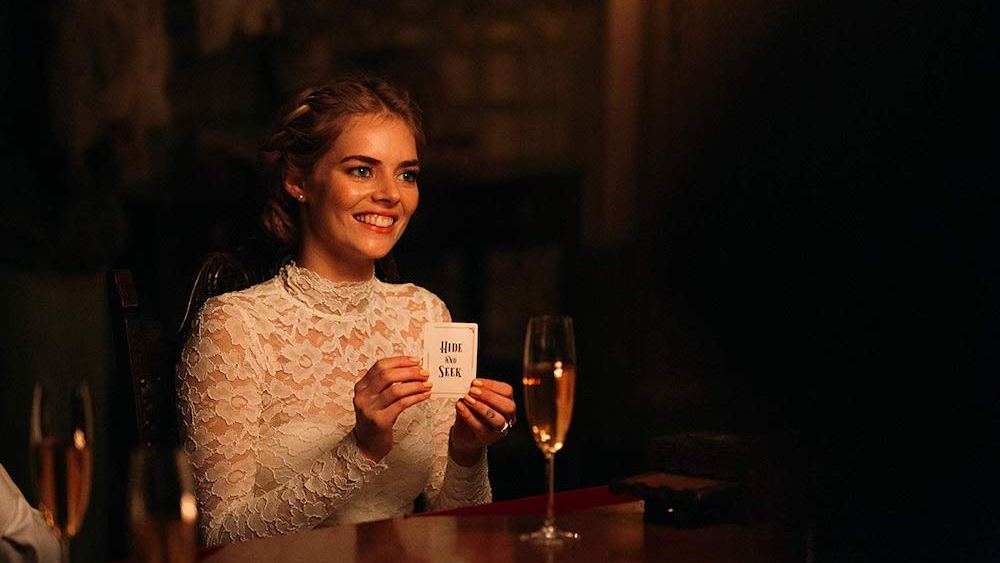
Sometimes, the splashiest horror movies of the summer aren't the ones that reinvent the wheel, but the ones that just jack the speed up to 10 on said wheel. That's what we get with Ready or Not, a horror-comedy funfest that takes a little bit of Clue (1985), a dash of You're Next (2013), and buckets of Sam Raimi-style gore effects to produce one of the most gleeful, popcorny fright flicks of the season. Are you ready?
 Ready or Not (U.S.A.)
Released: August 21, 2019
Director: Matt Bettinelli-Olpin & Tyler Gillett
Screenplay: Guy Busick & R. Christopher Murphy
Tagline: "The Game Begins"
Cast:
Samara Weaving as Grace
Adam Brody as Daniel Le Domas
Mark O'Brien as Alex Le Domas
Henry Czerny as Tony Le Domas
Andie MacDowell as Becky Le Domas
Former foster child Grace is marrying into the staggeringly wealthy, blue-blooded Le Domas family, who made their fortune as a gaming dynasty generations ago thanks to a generous benefactor. Despite their misgivings, Grace is marrying her fiance Alex for all the right reasons. She's a kind, genuine person happy to have found the big family she always wanted. But Grace soon finds that there's a lot you take on when you marry into money. Strange traditions must be upheld. Rituals that could end in either merrymaking or murder.
Ready or Not takes the conventions of The Most Dangerous Game (1932) and spruces them up for a modern critiquing of the 1%. The film makes no bold statement or offers any sort of scathing critique we've never encountered before--excessive wealth is dangerous, whether inherited or otherwise, and those that have it will go to great lengths to keep it rather than see their lifestyle threatened. What mattes here is the delivery, which is brutal, blood-soaked, and a total rollercoaster of jumps, jolts, and laughs. There's a certain balance that needs to be achieved in order to fashion a top-notch horror comedy, and it can be tricky to get just right, but Ready or Not is such a precise, tightly-written film that they really do nail that mixture. A fantastic and game cast adds to the viewer's delight as well.
 Horror darling Samara Weaving leads the fray, delivering a phenomenal performance that will make you squeal and cheer in equal measure. Adam Brody also stands out as brooding brother Daniel, despondent over the family legacy and his own role in maintaining that status. All of the characters end up fleshed out by the time the credits roll, including the gorgeous mansion setpiece, whose secret passageways, twisted hallways, and gilded floors make it a character all its own. You can tell the production design team must have been giddy laying out the plans for the labyrinthine Le Domas mansion.
It seems like everyone had a blast making this movie, in fact, which is one of the things that make sit so refreshing. Ready or Not is summer movie from days of old, unconcerned with setting up dark mythologies, larger universes, or never-ending franchises. It's an original story seeking only to deliver thrills and chills while being funny as hell along the way. And in that regard, it's a winner.
Ready or Not
5 - Totally Terrifying
4 - Crazy Creepy
3 - Fairly Frightening
2 - Slightly Scary
1 - Hardly Horror
Released: August 21, 2019
Director: Matt Bettinelli-Olpin & Tyler Gillett
Screenplay: Guy Busick & R. Christopher Murphy
Tagline: "The Game Begins"
Cast:
Samara Weaving as Grace
Adam Brody as Daniel Le Domas
Mark O'Brien as Alex Le Domas
Henry Czerny as Tony Le Domas
Andie MacDowell as Becky Le Domas
Former foster child Grace is marrying into the staggeringly wealthy, blue-blooded Le Domas family, who made their fortune as a gaming dynasty generations ago thanks to a generous benefactor. Despite their misgivings, Grace is marrying her fiance Alex for all the right reasons. She's a kind, genuine person happy to have found the big family she always wanted. But Grace soon finds that there's a lot you take on when you marry into money. Strange traditions must be upheld. Rituals that could end in either merrymaking or murder.
Ready or Not takes the conventions of The Most Dangerous Game (1932) and spruces them up for a modern critiquing of the 1%. The film makes no bold statement or offers any sort of scathing critique we've never encountered before--excessive wealth is dangerous, whether inherited or otherwise, and those that have it will go to great lengths to keep it rather than see their lifestyle threatened. What mattes here is the delivery, which is brutal, blood-soaked, and a total rollercoaster of jumps, jolts, and laughs. There's a certain balance that needs to be achieved in order to fashion a top-notch horror comedy, and it can be tricky to get just right, but Ready or Not is such a precise, tightly-written film that they really do nail that mixture. A fantastic and game cast adds to the viewer's delight as well.
It seems like everyone had a blast making this movie, in fact, which is one of the things that make sit so refreshing. Ready or Not is summer movie from days of old, unconcerned with setting up dark mythologies, larger universes, or never-ending franchises. It's an original story seeking only to deliver thrills and chills while being funny as hell along the way. And in that regard, it's a winner.
Ready or Not
5 - Totally Terrifying
4 - Crazy Creepy
3 - Fairly Frightening
2 - Slightly Scary
1 - Hardly Horror
Monday, August 12, 2019
Scary Stories to Tell in the Dark (2019)
An entire generation, maybe even two if we're getting technical, recalls being scarred for life by the macabre stories--and even more so, the twisted illustrations--of Alvin Schwartz and Stephen Gammell's Scary Stories to Tell in the Dark, a trilogy of nightmare-inducing collections that brought local legends, campfire tales, and ghost stories to grisly, realistic life. Now those short, savage shockers have made their way to the big screen, and they've brought the scary with them.
 Scary Stories to Tell in the Dark (USA/Canada)
Released: August 9, 2019
Director: Andre Ovredal
Screenplay: Dan & Kevin Hageman (story by Guillermo del Toro, Patrick Melton, & Marcus Dunstan)
Tagline: "Based on the iconic book series"
Cast:
Zoe Margaret Colletti as Stella Nichols
Michael Garza as Ramon Morales
Austin Zajur as Chuck Steinberg
Gabriel Rush as August "Auggie" Hilderbrandt
Natalie Ganzhorn as Ruth Steinberg
Austin Abrams as Tommy Milner
Kathleen Pollard as Sarah Bellows
On Halloween night, 1968, in the small, quiet town of Mill Valley, Pennsylvania, horror junkie and social outcast Stella Nichols and her friends invoke the spirit of the holiday by pranking back the school bullies, trick-or-treating, and showing the new guy in town their creepy local legend: the abandoned, supposedly haunted house of the Bellows family, a dilapidated mansion shrouded in rumors of child-murdering, insane daughters, and black magic. Naturally, they find themselves trapped in the basement, where the story claims one Sarah Bellows was imprisoned by her own family for being different, and where she wrote scary stories, whispering them through the walls to anyone who would hear them. Stella finds the legendary book of scary stories, but when she takes it home, a darkness is unleashed upon her and her friends, and the only way to stop it is to find out the whole story.
The frame narrative is Scary Stories' weakest element, by far. An uninspired, contrived set-up meant to churn out the monsters one right after the other. But isn't that what we're all paying for, anyway? We know why we're here, and the movie does too, so I'm not going to take points off for the filmmakers giving us exactly what we wanted from this adaptation. In fact, I applaud that they didn't go the anthology route, which I imagine was tempting. I think it would have left the viewer disjointed whereas here we become invested in the characters. And the monsters and creature effects, of course.

While our main crew slips easily into teenage stock types, there are moments where each performer shines through. Casting relative unknowns and actual teen actors was a benefit here, especially since the film is targeted at a young adult audience and is very much structured as a gateway film for the genre. That being said, Ovredal isn't afraid to drop some serious scares in here, but as most of us would agree, that's the tried and true way to hook new blood. The frights are well-earned, and the combo practical/CGI effects are impressive, rendering Gammell's iconic drawings to a T. The Jangly Man and the spider scene are highlights, an effective combination of psychological terror and twitchy, gross-out body horror.
Ovredal excels with tone, both in scares and general atmosphere. Mill Valley is quickly established as a Derry/Castle Rock-type Appalachian village faced with looming change as the cloud of the draft hangs thick, the Vietnam War kicks into high gear, and Nixon bumbles his way into the presidency. Environmental exploration shots and a chilly score--Lana Del Ray's witchy, weird cover of Donovan's "Season of the Witch," in particular--will make your flesh goosebump at an imagined autumn breeze as you swear you could taste cinnamon in the air. And could there be more perfect conditions under which to hear a scary story? Well, aside from in the dark, of course.
Scary Stories to Tell in the Dark
5 - Totally Terrifying
4 - Crazy Creepy
3 - Fairly Frightening
2 - Slightly Scary
1 - Hardly Horror

Released: August 9, 2019
Director: Andre Ovredal
Screenplay: Dan & Kevin Hageman (story by Guillermo del Toro, Patrick Melton, & Marcus Dunstan)
Tagline: "Based on the iconic book series"
Cast:
Zoe Margaret Colletti as Stella Nichols
Michael Garza as Ramon Morales
Austin Zajur as Chuck Steinberg
Gabriel Rush as August "Auggie" Hilderbrandt
Natalie Ganzhorn as Ruth Steinberg
Austin Abrams as Tommy Milner
Kathleen Pollard as Sarah Bellows
On Halloween night, 1968, in the small, quiet town of Mill Valley, Pennsylvania, horror junkie and social outcast Stella Nichols and her friends invoke the spirit of the holiday by pranking back the school bullies, trick-or-treating, and showing the new guy in town their creepy local legend: the abandoned, supposedly haunted house of the Bellows family, a dilapidated mansion shrouded in rumors of child-murdering, insane daughters, and black magic. Naturally, they find themselves trapped in the basement, where the story claims one Sarah Bellows was imprisoned by her own family for being different, and where she wrote scary stories, whispering them through the walls to anyone who would hear them. Stella finds the legendary book of scary stories, but when she takes it home, a darkness is unleashed upon her and her friends, and the only way to stop it is to find out the whole story.
The frame narrative is Scary Stories' weakest element, by far. An uninspired, contrived set-up meant to churn out the monsters one right after the other. But isn't that what we're all paying for, anyway? We know why we're here, and the movie does too, so I'm not going to take points off for the filmmakers giving us exactly what we wanted from this adaptation. In fact, I applaud that they didn't go the anthology route, which I imagine was tempting. I think it would have left the viewer disjointed whereas here we become invested in the characters. And the monsters and creature effects, of course.

While our main crew slips easily into teenage stock types, there are moments where each performer shines through. Casting relative unknowns and actual teen actors was a benefit here, especially since the film is targeted at a young adult audience and is very much structured as a gateway film for the genre. That being said, Ovredal isn't afraid to drop some serious scares in here, but as most of us would agree, that's the tried and true way to hook new blood. The frights are well-earned, and the combo practical/CGI effects are impressive, rendering Gammell's iconic drawings to a T. The Jangly Man and the spider scene are highlights, an effective combination of psychological terror and twitchy, gross-out body horror.
Ovredal excels with tone, both in scares and general atmosphere. Mill Valley is quickly established as a Derry/Castle Rock-type Appalachian village faced with looming change as the cloud of the draft hangs thick, the Vietnam War kicks into high gear, and Nixon bumbles his way into the presidency. Environmental exploration shots and a chilly score--Lana Del Ray's witchy, weird cover of Donovan's "Season of the Witch," in particular--will make your flesh goosebump at an imagined autumn breeze as you swear you could taste cinnamon in the air. And could there be more perfect conditions under which to hear a scary story? Well, aside from in the dark, of course.
Scary Stories to Tell in the Dark
5 - Totally Terrifying
4 - Crazy Creepy
3 - Fairly Frightening
2 - Slightly Scary
1 - Hardly Horror
Thursday, July 25, 2019
Crawl
A college student trapped in a crawlspace in the coastal Florida home of her injured father during a category 5 hurricane. Oh, and there's a giant alligator there too. Talk about one lousy day. But also one rollicking premise for a horror flick, one that delivers the fun and frights on all fronts and makes for a great addition to the canon of summertime creature features.
 Crawl (U.S.A.)
Released: July 12, 2019
Director: Alexandre Aja
Screenplay: Michael & Sean Rasmussen
Tagline: "They were here first"
Cast:
Kaya Scodelario as Haley Keller
Barry Pepper as Dave Keller
Ross Anderson as Wayne Taylor
Moryfydd Clark as Beth Keller
Cso-Cso as Sugar
Haley Keller (Scodelario) is an accomplished swimmer at the University of Florida, though she may be losing her competitive edge. As Hurricane Wendy, a category 5 storm, bears down on the east coast, Haley learns from her sister Beth that no one can get ahold of their father, whom Haley has been slightly estranged from in the wake of their parents' divorce, and Beth is worried he won't follow the evacuation order. Haley takes it upon herself to drive into the heart of the raging storm only to discover that her father lies unconscious in the dank crawlspace beneath their old home, a giant bite mark in his shoulder and a lurking, prehistoric predator in the shadows.
 The set-up for this film is thin and straightforward, and one might not think there's a ton of meat here (ba dum dum, psh!), but Aja has a gift for piling on complications and barriers that keep the plot and the tension on a steady incline for the entire brisk runtime. Haley and Dave just can NOT catch a break, but despite everything that possibly could go wrong going wrong at each turn, they dig deep, find their inner resolve, and get creative about what they can do next to maximize their chances of survival in what might be the least likely survival scenario ever. But damn if it's a blast to watch them try.
Crawl isn't overly violent by any means, but its sense of hopelessness is omnipresent, twisted into something both exhilarating and wickedly funny for the audience to watch. You can't help but bemoan "oh man!" every time Haley and Dave's initiative gets squandered by a new twist of fate, even as you cringe-smile in anticipation of what they'll do next. It's a lean film, one unconcerned with emotional baggage or extraneous subplots, and while this might be considered shoddy craftsmanship in other films, here it's exactly what Crawl needs to keep the thrill ride sensation in motion.
 Scodelario offers a magnetic and grounded performance that aids in propelling the film forward. Haley is beaten down by everything from the elements to apex predators to her own sense of self-worth; she's literally fighting on her own against the world, and what could be a more universal feeling for audiences to empathize with? The odds are stacked against her three times over, yet there's a fire and a spunkiness in her character that lets us know that hey, she just might pull this off; let's see. Like Haley, Crawl has modest ambitions, and meets them with crowd-pleasing grace. A perfect popcorn movie any way you slice it. Or should I say any way you shred it to bits?

Crawl
5 - Totally Terrifying
4 - Crazy Creepy
3 - Fairly Frightening
2 - Slightly Scary
1 - Hardly Horror

Released: July 12, 2019
Director: Alexandre Aja
Screenplay: Michael & Sean Rasmussen
Tagline: "They were here first"
Cast:
Kaya Scodelario as Haley Keller
Barry Pepper as Dave Keller
Ross Anderson as Wayne Taylor
Moryfydd Clark as Beth Keller
Cso-Cso as Sugar
Haley Keller (Scodelario) is an accomplished swimmer at the University of Florida, though she may be losing her competitive edge. As Hurricane Wendy, a category 5 storm, bears down on the east coast, Haley learns from her sister Beth that no one can get ahold of their father, whom Haley has been slightly estranged from in the wake of their parents' divorce, and Beth is worried he won't follow the evacuation order. Haley takes it upon herself to drive into the heart of the raging storm only to discover that her father lies unconscious in the dank crawlspace beneath their old home, a giant bite mark in his shoulder and a lurking, prehistoric predator in the shadows.
 The set-up for this film is thin and straightforward, and one might not think there's a ton of meat here (ba dum dum, psh!), but Aja has a gift for piling on complications and barriers that keep the plot and the tension on a steady incline for the entire brisk runtime. Haley and Dave just can NOT catch a break, but despite everything that possibly could go wrong going wrong at each turn, they dig deep, find their inner resolve, and get creative about what they can do next to maximize their chances of survival in what might be the least likely survival scenario ever. But damn if it's a blast to watch them try.
Crawl isn't overly violent by any means, but its sense of hopelessness is omnipresent, twisted into something both exhilarating and wickedly funny for the audience to watch. You can't help but bemoan "oh man!" every time Haley and Dave's initiative gets squandered by a new twist of fate, even as you cringe-smile in anticipation of what they'll do next. It's a lean film, one unconcerned with emotional baggage or extraneous subplots, and while this might be considered shoddy craftsmanship in other films, here it's exactly what Crawl needs to keep the thrill ride sensation in motion.


Crawl
5 - Totally Terrifying
4 - Crazy Creepy
3 - Fairly Frightening
2 - Slightly Scary
1 - Hardly Horror
Monday, July 15, 2019
Midsommar
Ari Aster faced a tall order in having to follow-up his nightmarish critical darling Hereditary (2018), but he aced it with Midsommar, an ambitious emotional drama concerning a grief, trauma, and failing relationships told through the lens of occult horror. Full of mania, madness, and anxiety, the film tells a more straightforward story than Aster's debut, yet never loses that pervading sense of inescapable dread that Aster has already made his trademark.
 Midsommar (USA/Sweden)
Released: July 3, 2019
Director: Ari Aster
Screenplay: Ari Aster
Tagline: "Let the festivities begin"
Cast:
Florence Pugh as Dani Ardor
Jack Reynor as Christian Hughes
William Jackson Harper as Josh
Vilhelm Blomgren as Pelle
Will Poulter as Mark
Dani Ardor (Pugh) is an anxious college student in a declining, co-dependent relationship with her distant boyfriend, Christian (Reynor). After years of simmering discontentment, Christian is prepared to finally break up with Dani, but a shocking family tragedy leaves Dani gutted and alone, and Christian stays with her to lessen the pain. Several months later, Christian invites Dani to tag along on his guys' trip to Sweden, home of his classmate Pelle. Dani agrees and the five head out to Pelle's folksy hometown, a remote village in the far north of Scandinavia, as the villagers are preparing to hold a festival that occurs once every 90 years.
Everyone at the commune is very welcoming and kind, at first, but naturally as the vacation goes on, things become more strange, bizarre, and downright sinister. Unnerving rituals and eerie murals are only the beginning. It's familiar scaffolding for horror fans: loudmouth, horny Americans travel to rural countryside and get their comeuppance, and there are certainly stock characters at play here. The shitty boyfriend. The nerd. The pensive, cute "foreigner." Aster is aware of this framework, however, and though he may not transcend the template, he certainly makes it his own.
Much like in Hereditary, Aster explores emotional turmoil through grand imagery and twisted ideas, this time in specific regards to a doomed, toxic relationship. There's a tension here outside anything related to the physical safety of our core characters' stay in the village; a tension in watching both Dani and Christian continually postpone their inevitable breakup though it's clear to each of them that their time together has run its course. Neither of them can rip off the band-aid, and as viewers we know that the longer they wait, the more damned their fate.

What's interesting with Midsommar is that the conclusion is foregone. From the moment our heroes step foot in Pelle's village, there's only one way this can end,but the art of the film is in driving us towards that inevitable ending while still somehow maintaining interest, dread, and tension. Of course, we don't know the specifics of how this will all play out, but we know that it will, and that question locks the viewer in a vice grip as we wait to see what sort of specific, disturbing violence will rule the third act.
The symbolism can be a bit heavy-handed at times, though that may be because we get to spend so much time dwelling on Aster's foreshadowing. It's a long film, and there's lots of extended, lingering shots to give the viewer time to pick up on all the runes and drawings and murals that spell out what sort of danger Dani and the others are wading into. The camerawork in general is phenomenal, and the use of pastel and light to create such uncomfortable imagery is astounding. It's one of the few, great horror films that is truly both beautiful and terrifying at the same time. It's a film with a soul, formulaic and campy at times yet sweeping and vivid at others; a riff on The Wicker Man (1973) that morphs into its own gorgeous, demented creature that is at once lush and tranquil, jarring and fiery.
Midsommar
5 - Totally Terrifying
4 - Crazy Creepy
3 - Fairly Frightening
2 - Slightly Scary
1 - Hardly Horror

Released: July 3, 2019
Director: Ari Aster
Screenplay: Ari Aster
Tagline: "Let the festivities begin"
Cast:
Florence Pugh as Dani Ardor
Jack Reynor as Christian Hughes
William Jackson Harper as Josh
Vilhelm Blomgren as Pelle
Will Poulter as Mark
Dani Ardor (Pugh) is an anxious college student in a declining, co-dependent relationship with her distant boyfriend, Christian (Reynor). After years of simmering discontentment, Christian is prepared to finally break up with Dani, but a shocking family tragedy leaves Dani gutted and alone, and Christian stays with her to lessen the pain. Several months later, Christian invites Dani to tag along on his guys' trip to Sweden, home of his classmate Pelle. Dani agrees and the five head out to Pelle's folksy hometown, a remote village in the far north of Scandinavia, as the villagers are preparing to hold a festival that occurs once every 90 years.
Everyone at the commune is very welcoming and kind, at first, but naturally as the vacation goes on, things become more strange, bizarre, and downright sinister. Unnerving rituals and eerie murals are only the beginning. It's familiar scaffolding for horror fans: loudmouth, horny Americans travel to rural countryside and get their comeuppance, and there are certainly stock characters at play here. The shitty boyfriend. The nerd. The pensive, cute "foreigner." Aster is aware of this framework, however, and though he may not transcend the template, he certainly makes it his own.
Much like in Hereditary, Aster explores emotional turmoil through grand imagery and twisted ideas, this time in specific regards to a doomed, toxic relationship. There's a tension here outside anything related to the physical safety of our core characters' stay in the village; a tension in watching both Dani and Christian continually postpone their inevitable breakup though it's clear to each of them that their time together has run its course. Neither of them can rip off the band-aid, and as viewers we know that the longer they wait, the more damned their fate.

What's interesting with Midsommar is that the conclusion is foregone. From the moment our heroes step foot in Pelle's village, there's only one way this can end,but the art of the film is in driving us towards that inevitable ending while still somehow maintaining interest, dread, and tension. Of course, we don't know the specifics of how this will all play out, but we know that it will, and that question locks the viewer in a vice grip as we wait to see what sort of specific, disturbing violence will rule the third act.
The symbolism can be a bit heavy-handed at times, though that may be because we get to spend so much time dwelling on Aster's foreshadowing. It's a long film, and there's lots of extended, lingering shots to give the viewer time to pick up on all the runes and drawings and murals that spell out what sort of danger Dani and the others are wading into. The camerawork in general is phenomenal, and the use of pastel and light to create such uncomfortable imagery is astounding. It's one of the few, great horror films that is truly both beautiful and terrifying at the same time. It's a film with a soul, formulaic and campy at times yet sweeping and vivid at others; a riff on The Wicker Man (1973) that morphs into its own gorgeous, demented creature that is at once lush and tranquil, jarring and fiery.
Midsommar
5 - Totally Terrifying
4 - Crazy Creepy
3 - Fairly Frightening
2 - Slightly Scary
1 - Hardly Horror
Thursday, October 25, 2018
31 by 31 Challenge #25: THE EVIL WITHIN (2017)
In the great, vast sea of direct-to-video horror movies, it can be difficult for a film to stand out, even if it's far and above the quality of the movies it shares the bin with. There's just so many straight-to-streaming movies out there, and most of them are unremarkable at best. No one could be blamed for taking a quick glance at The Evil Within and relegating it to that forgettable heap of halfhearted horror, but it would be a grave mistake nonetheless. The film is fascinating, both in its production history and the nightmarish onscreen vision that was eventually realized after fifteen years of loving labor.
 The Evil Within
Released: February 26, 2017
Director: Andrew Getty
Screenplay: Andrew Getty
Tagline: "You can't run from a nightmare"
Cast:
Frederick Koehler as Dennis Peterson
Sean Patrick Flanery as John Peterson
Dina Meyer as Lydia
Michael Berryman as The Cadaver
Kim Darby as Mildy Torres
Francis Guinan as Dr. Preston
Brianna Brown as Susan
Dennis Peterson is a young man with special needs who lives with his older brother John. Haunted by frightening dreams that have plagued him since childhood, Dennis discovers that the nightmarish figures of his dreams are now appearing in his waking life as well; in particular, a demon known as the Cadaver. After discovering an old, floor-length mirror in the basement, Dennis finds that he can communicate with this demonic specter and that the Cadaver's grip on his mind and body will only be released if Dennis commits a series of increasingly violent crimes that put himself and the people he cares about, in terrible danger.
The Evil Within is the passion project of Andrew Getty, grandson of oil magnate J. Paul Getty, and funded almost entirely by his inheritance. The film took fifteen years to move from pre-production to completion, with Getty obsessing over each and every frame of the movie and working out of a makeshift studio in his mansion. Unfortunately, Getty died in 2015 before completion of his magnum opus. His producer Michael Luceri finished the film in accordance with Getty's vision, and the result is eccentric, campy film that is strangely alluring in a Burtonesque way by way of David Lynch.
 The aesthetic of the film comes from Getty's childhood nightmares, which he described as hvaing been disturbingly real. As such, his movie ponders the question of what if the images in are nightmares were being fed to us by some malevolent entity rather than a product of our own mind? It's an interesting quandry to base a horror film on, and the exploration of this posited question allows Getty to take his film into all sorts of different genre territory: possesion, slasher, detective, etc. All of that thrown together at once can produce a strange, muddled story at times, but it works because that's reflective of a dream itself: not always linear and operating by its own, otherworldy logic.
The joy of this film isn't really in the framework of the narrative, however, but on the surreal atmosphere that Getty has managed to conjure and present his story through. The animatronic special effects and creations are impressive, and the puppetry work is chilling in its jerky half-realness. The nuance of the detail poured into these parts of the film help The Evil Within rise above any script or acting flaws. It's a film that's bursting with its creator's passion--that mirror scene is one of the most admirable, and freaky, sequences I've watched in recent years--and might be one of the best examples of how genius can quickly become insanity. It's not a flawless film by any means, but it's impossible to limit such a distinctly singular creation. Like a dream, it can't quite be defined, but you'll feel the aftereffects long after your initial exposure.
The Evil Within
5 - Totally Terrifying
4 - Crazy Creepy
3 - Fairly Frightening
2 - Slightly Scary
1 - Hardly Horror

Released: February 26, 2017
Director: Andrew Getty
Screenplay: Andrew Getty
Tagline: "You can't run from a nightmare"
Cast:
Frederick Koehler as Dennis Peterson
Sean Patrick Flanery as John Peterson
Dina Meyer as Lydia
Michael Berryman as The Cadaver
Kim Darby as Mildy Torres
Francis Guinan as Dr. Preston
Brianna Brown as Susan
Dennis Peterson is a young man with special needs who lives with his older brother John. Haunted by frightening dreams that have plagued him since childhood, Dennis discovers that the nightmarish figures of his dreams are now appearing in his waking life as well; in particular, a demon known as the Cadaver. After discovering an old, floor-length mirror in the basement, Dennis finds that he can communicate with this demonic specter and that the Cadaver's grip on his mind and body will only be released if Dennis commits a series of increasingly violent crimes that put himself and the people he cares about, in terrible danger.
The Evil Within is the passion project of Andrew Getty, grandson of oil magnate J. Paul Getty, and funded almost entirely by his inheritance. The film took fifteen years to move from pre-production to completion, with Getty obsessing over each and every frame of the movie and working out of a makeshift studio in his mansion. Unfortunately, Getty died in 2015 before completion of his magnum opus. His producer Michael Luceri finished the film in accordance with Getty's vision, and the result is eccentric, campy film that is strangely alluring in a Burtonesque way by way of David Lynch.

The joy of this film isn't really in the framework of the narrative, however, but on the surreal atmosphere that Getty has managed to conjure and present his story through. The animatronic special effects and creations are impressive, and the puppetry work is chilling in its jerky half-realness. The nuance of the detail poured into these parts of the film help The Evil Within rise above any script or acting flaws. It's a film that's bursting with its creator's passion--that mirror scene is one of the most admirable, and freaky, sequences I've watched in recent years--and might be one of the best examples of how genius can quickly become insanity. It's not a flawless film by any means, but it's impossible to limit such a distinctly singular creation. Like a dream, it can't quite be defined, but you'll feel the aftereffects long after your initial exposure.
The Evil Within
5 - Totally Terrifying
4 - Crazy Creepy
3 - Fairly Frightening
2 - Slightly Scary
1 - Hardly Horror
Wednesday, October 24, 2018
31 by 31 Challenge #24: MANIAC COP (1988)
An action movie aesthetic combined with horror film mainstays and a classic 80's slasher template--what more could you possibly want from schlock horror? Nothing, of course. And that's why William Lustig's Maniac Cop is one of the most fun, cheesy cult films that you can uncover in the wide world of horror. A perfect flick to throw on while imbibing with friends, and a nice alternative to Leprechaun (1993) for St. Patrick's Day horror fare.
 Maniac Cop
Released: May 13, 1988
Director: William Lustig
Screenplay: Larry Cohen
Tagline: "You have the right to remain silent. Forever."
Cast:
Bruce Campbell as Officer Jack W. Forrest, Jr.
Tom Atkins as Detective Lieutenant Frank McCrae
Lauren Landon Officer Theresa Mallory
Richard Roundtree as Commissioner Pike
William Smith as Captain Ripley
Robert D'Zar as Officer Matthew Cordell
Nina Arvesen Regina Sheperd
Sheree North as Officer Sally Noland
A young woman is attacked on the streets of New York on her way. She runs for her life, relieved to see a cop off in the distance. She's saved. She runs into his heroic arms...and is then throttled to death by her perceived savior. On that quick, brutal opening, Lustig lets the viewer know exactly what's in store with this movie. There's a cop. He's a maniac. And that's that.
When examining the glut of slashers that dominated horror in the 80's, Maniac Cop actually stands out for a fairly unique premise, but it's more notable for it's setting. The film takes place entirely on the streets of the Big Apple, a locale often avoided with purpose in horror films, and that Lustig and his film tackled exactly one year before Jason did in the eighth Friday the 13th installment. Interestingly, Maniac Cop delivers on everything that Jason Takes Manhattan promised but failed, to do, i.e. a hulking, undead brute stomping around slaying innocent civilians all over the city that never sleeps. The result makes for one of horror's greatest unsung gems.
 It doesn't hurt that genre favorites Bruce Campbell and Tom Atkins star as a gruff, loner cop and a seasoned detective trying to unravel how it's possible that disgraced (and deceased) former officer Matt Cordell is behind the recent string of killings, all of which witnesses say were carried out by a man in uniform. The answer to that mystery is as outlandish as any other horror backstory you can think of, but the plot is merely just window dressing for choice kills and beloved actors to strut around saying and doing badass things in their pursuit for a psychotic version of The Hulk. The acting is stiff at times, and the dialogue is even more rigid, but as one of the last true grindhouse films, Maniac Cop is fun, mindless camp that was always destined for the shelves of independent video stores.
In our current climate, we might be tempted to read into the film as a commentary on police brutality and the imbalance of power that's fueled by systemized corruption. It certainly would have been applicable at the time, as well, but beyond the obvious initial message, the film is too shallow to offer a more thought-provoking critique. And that's okay. Not every film has to require an English degree to enjoy. Sometimes all we need is a popcorn flick. And late 80's, low-budget horror had some of the best popcorn flicks out there. Maniac Cop sits comfortably on that shelf.
Maniac Cop
5 - Totally Terrifying
4 - Crazy Creepy
3 - Fairly Frightening
2 - Slightly Scary
1 - Hardly Horror

Released: May 13, 1988
Director: William Lustig
Screenplay: Larry Cohen
Tagline: "You have the right to remain silent. Forever."
Cast:
Bruce Campbell as Officer Jack W. Forrest, Jr.
Tom Atkins as Detective Lieutenant Frank McCrae
Lauren Landon Officer Theresa Mallory
Richard Roundtree as Commissioner Pike
William Smith as Captain Ripley
Robert D'Zar as Officer Matthew Cordell
Nina Arvesen Regina Sheperd
Sheree North as Officer Sally Noland
A young woman is attacked on the streets of New York on her way. She runs for her life, relieved to see a cop off in the distance. She's saved. She runs into his heroic arms...and is then throttled to death by her perceived savior. On that quick, brutal opening, Lustig lets the viewer know exactly what's in store with this movie. There's a cop. He's a maniac. And that's that.
When examining the glut of slashers that dominated horror in the 80's, Maniac Cop actually stands out for a fairly unique premise, but it's more notable for it's setting. The film takes place entirely on the streets of the Big Apple, a locale often avoided with purpose in horror films, and that Lustig and his film tackled exactly one year before Jason did in the eighth Friday the 13th installment. Interestingly, Maniac Cop delivers on everything that Jason Takes Manhattan promised but failed, to do, i.e. a hulking, undead brute stomping around slaying innocent civilians all over the city that never sleeps. The result makes for one of horror's greatest unsung gems.

In our current climate, we might be tempted to read into the film as a commentary on police brutality and the imbalance of power that's fueled by systemized corruption. It certainly would have been applicable at the time, as well, but beyond the obvious initial message, the film is too shallow to offer a more thought-provoking critique. And that's okay. Not every film has to require an English degree to enjoy. Sometimes all we need is a popcorn flick. And late 80's, low-budget horror had some of the best popcorn flicks out there. Maniac Cop sits comfortably on that shelf.
Maniac Cop
5 - Totally Terrifying
4 - Crazy Creepy
3 - Fairly Frightening
2 - Slightly Scary
1 - Hardly Horror
31 by 31 Challenge #23: BEHIND THE MASK: THE RISE OF LESLIE VERNON (2006)
Made on little more than pennies, released into the festival circuit, and then relegated to direct-to-DVD obscurity, Behind the Mask: The Rise of Leslie Vernon is arguably the peak definition of the twenty-first-century cult film. Nothing about the film should work, first and foremost its ludicrous premise, and yet somehow it manages to bring all its disparate parts together and create a brilliant, meta-horror funfest the likes of which you won't find anywhere else.
 Behind the Mask: The Rise of Leslie Vernon
Released: March 12, 2006
Director: Scott Glosserman
Screenplay: Scott Glosserman & David J. Stieve
Tagline: "Freddy. Jason. Michael. We all need someone to look up to"
Cast:
Nathan Baesel as Leslie Vernon/Mancuso
Angela Goethals as Taylor Gentry
Robert Englund as Doc Halloran
Kate Lang Johnson as Kelly
Scott Wilson as Eugene/Billy
Ben Pace as Doug
Britain Spellings as Todd
In a world where Freddy Krueger, Jason Voorhees, Michael Myers, Norman Bates, and all the other great slashers of horror cinema were very real serial killers, three college students are working on their thesis for their film majors: a documentary following Leslie Vernon, a gleeful, gushing gore fan who hopes to follow in the footsteps of the famous killers he worships. Leslie is a killer-in-training, and he has meticulous plans to debut himself as a mass murderer by picking off a group of teenagers, facing down a virginal Final Girl, and then dying at her hands in a climactic showdown. Told mostly in mockumentary/found footage style, the film shifts to the traditional third-person presentation when it's necessary for the viewer to see Leslie's plans play out. This setup comes in handy during the third act, when a swerve in the narrative sends everyone, viewer and characters alike, scrambling for the truth.
Through its structure, Behind the Mask is taking on one of the oldest conventions of the slasher sub-genre, the killer's viewpoint, but it's doing it in a way that is significantly different from other meta-horror films like New Nightmare (1994), Scream (1996), and The Cabin in the Woods (2012); Mask isn't concerned as much with the archness of its own meta-textuality like those other films. Instead, it's a film that acknowledges the conventions of the slasher in a giddy, embracing manner rather than the detached, almost cruel, exploration seen in its sister films. This can be attributed to lead actor Nathan Baesel, who perfectly channels the gleeful nerd that floods cons and obsesses over his craft. It's easy to forget that Leslie's goal is to murder innocent teenagers when he's so passionately explaining his weaponology or glowing over the kill history of his predecessors.
 As Taylor and her crew explore Leslie, his psyche, and his plan, the film raises questions of theoretical violence and exploitation, and what part each of those plays in escapism. After all, the slasher genre is one that exists on the premise of watching human stand-ins get slaughtered, sliced, and butchered, and at a conceptual level, there's something quite disturbing about that realization. Yet Mask never turns up its nose at the viewer but offers a safe space for us to get lost in the appeal of the slasher and face the nasty implications of the genre head-on at the same time. An adept script helps elevate several moments of excellent dark comedy that stick in the bones once the story is completed in a way that no jump scare could ever hope to achieve.
Though not quite as famous as its meta-horror counterparts, and perhaps not as ambitious either, Behind the Mask is still a sharp, focused film that is true to his guns from start to finish. It balances thoughtfulness and macabre comedy and churns out a bloodbath that any of Leslie's icons would be proud to call their own. It's a peculiar, fascinating film that tries to explain a peculiar, fascinating world that many of us call home. A world born of monsters.
Behind the Mask: The Rise of Leslie Vernon
5 - Totally Terrifying
4 - Crazy Creepy
3 - Fairly Frightening
2 - Slightly Scary
1 - Hardly Horror

Released: March 12, 2006
Director: Scott Glosserman
Screenplay: Scott Glosserman & David J. Stieve
Tagline: "Freddy. Jason. Michael. We all need someone to look up to"
Cast:
Nathan Baesel as Leslie Vernon/Mancuso
Angela Goethals as Taylor Gentry
Robert Englund as Doc Halloran
Kate Lang Johnson as Kelly
Scott Wilson as Eugene/Billy
Ben Pace as Doug
Britain Spellings as Todd
In a world where Freddy Krueger, Jason Voorhees, Michael Myers, Norman Bates, and all the other great slashers of horror cinema were very real serial killers, three college students are working on their thesis for their film majors: a documentary following Leslie Vernon, a gleeful, gushing gore fan who hopes to follow in the footsteps of the famous killers he worships. Leslie is a killer-in-training, and he has meticulous plans to debut himself as a mass murderer by picking off a group of teenagers, facing down a virginal Final Girl, and then dying at her hands in a climactic showdown. Told mostly in mockumentary/found footage style, the film shifts to the traditional third-person presentation when it's necessary for the viewer to see Leslie's plans play out. This setup comes in handy during the third act, when a swerve in the narrative sends everyone, viewer and characters alike, scrambling for the truth.
Through its structure, Behind the Mask is taking on one of the oldest conventions of the slasher sub-genre, the killer's viewpoint, but it's doing it in a way that is significantly different from other meta-horror films like New Nightmare (1994), Scream (1996), and The Cabin in the Woods (2012); Mask isn't concerned as much with the archness of its own meta-textuality like those other films. Instead, it's a film that acknowledges the conventions of the slasher in a giddy, embracing manner rather than the detached, almost cruel, exploration seen in its sister films. This can be attributed to lead actor Nathan Baesel, who perfectly channels the gleeful nerd that floods cons and obsesses over his craft. It's easy to forget that Leslie's goal is to murder innocent teenagers when he's so passionately explaining his weaponology or glowing over the kill history of his predecessors.

Though not quite as famous as its meta-horror counterparts, and perhaps not as ambitious either, Behind the Mask is still a sharp, focused film that is true to his guns from start to finish. It balances thoughtfulness and macabre comedy and churns out a bloodbath that any of Leslie's icons would be proud to call their own. It's a peculiar, fascinating film that tries to explain a peculiar, fascinating world that many of us call home. A world born of monsters.
Behind the Mask: The Rise of Leslie Vernon
5 - Totally Terrifying
4 - Crazy Creepy
3 - Fairly Frightening
2 - Slightly Scary
1 - Hardly Horror
Tuesday, October 23, 2018
31 by 31 Challenge #22: CLOVERFIELD (2008)
Perhaps the best film about 9/11, and arguably about the 21st century as we have thus far experienced it, Cloverfield is a work of expressionist horror that mixes contemporary found footage cinematography with old school monster rules to create something that is both an homage to the kaiju films of the 1950's and a potent commentary on paranoia, documentation, and the Age of Terror.
 Cloverfield (U.S.A.)
Released: January 18, 2008
Director: Matt Reeves
Screenplay: Drew Goddard
Tagline: "Some Thing Has Found Us"
Cast:
Michael Stahl-David as Rob Hawkins
T.J. Miller as Hud Platt
Jessica Lucas as Lily Ford
Odette Yustman as Beth McIntyre
Lizzy Caplan as Marlena Diamond
Mike Vogel as Jason Hawkins
There are those who argue that movies concerning giant, rampaging monsters are a class of genre film all their own, independent from horror; I for one consider them but another of the varied sub-genres of horror since their primary aim matches that of all the other flicks in this twisted corner of cinema that we love so dearly: to shock and to terrify. Initiated with King Kong (1933) and then booming onto the scene in the 1950's, the giant monster sub-genre faded into relative obscurity by the 1970's, to then be revitalized with 2008's Cloverfield, a mega-hit found footage style movie that not only made gigantic beasts scary again, but provided commentary on the ineptitude of the military in the face of mass panic and destruction and the delicate threads on which society itself was bound together, and how easy those threads can unravel.
On a fine, lovely May evening, a giant monster, believed to have come from the sea, attacks Manhattan. A group of twenty-something party goers, who have gathered to bid their friend Rob farewell before he moves to Japan for his new job,happen to have a video camera on hand and thus "document" the attack and their escape attempts as best they can while simultaneously recording their own hysteria and panic. It's this element that makes Cloverfield a radical reinvention of the giant-monster subgenre in that the entire story is told and shot from street level, making the camera just as much of a character as those that wield it as weapon, flashlight, and journal.
 Cloverfield was the first giant-monster movie to take this approach, as well as to show the monster only in quick flashes and glimpses until the climax. It's a shift towards naturalism and realism that was completely absent in the kaiju men-in-monster-suit movies of the 50's and the Kong movies of the 30's and one that brings a sense of immediacy to the film as well. There are no visual impediments preventing our belief in the monster now, and when we do glimpse it, we understand that it is not only large, but terrifying in appearance. For perhaps the first time in the history of giant-monster movies, the monster is actually scary.
At its core, the film is about how easily normality can be shattered by sweeping, uncontrollable tragedy; how a safe, inconsequential life can be faced with disaster in the blink of an eye. It's an exploration of the apocalyptic fear that gripped America in the wake of 9/11 and that we wallowed in up through Hurricane Katrina as well. By splicing in "old" footage of Rob and Beth jaunting to Coney Island, we're constantly reminded of normalcy destroyed and lives upended, because the video of the monster is overtaking this pleasant memory, as the present must always overwrite the past. This juxtaposition also allows our characters to feel more human, and thus their plight more tragic. We see what they stand to lose as society crumbles around them. It's a facet of the film that resonated with audiences in 2008 and, in a testament to both Cloverfield's staying power and to our current climate, continues to unsettle audiences today.
Cloverfield
5 - Totally Terrifying
4 - Crazy Creepy
3 - Fairly Frightening
2 - Slightly Scary
1 - Hardly Horror

Released: January 18, 2008
Director: Matt Reeves
Screenplay: Drew Goddard
Tagline: "Some Thing Has Found Us"
Cast:
Michael Stahl-David as Rob Hawkins
T.J. Miller as Hud Platt
Jessica Lucas as Lily Ford
Odette Yustman as Beth McIntyre
Lizzy Caplan as Marlena Diamond
Mike Vogel as Jason Hawkins
There are those who argue that movies concerning giant, rampaging monsters are a class of genre film all their own, independent from horror; I for one consider them but another of the varied sub-genres of horror since their primary aim matches that of all the other flicks in this twisted corner of cinema that we love so dearly: to shock and to terrify. Initiated with King Kong (1933) and then booming onto the scene in the 1950's, the giant monster sub-genre faded into relative obscurity by the 1970's, to then be revitalized with 2008's Cloverfield, a mega-hit found footage style movie that not only made gigantic beasts scary again, but provided commentary on the ineptitude of the military in the face of mass panic and destruction and the delicate threads on which society itself was bound together, and how easy those threads can unravel.
On a fine, lovely May evening, a giant monster, believed to have come from the sea, attacks Manhattan. A group of twenty-something party goers, who have gathered to bid their friend Rob farewell before he moves to Japan for his new job,happen to have a video camera on hand and thus "document" the attack and their escape attempts as best they can while simultaneously recording their own hysteria and panic. It's this element that makes Cloverfield a radical reinvention of the giant-monster subgenre in that the entire story is told and shot from street level, making the camera just as much of a character as those that wield it as weapon, flashlight, and journal.
 Cloverfield was the first giant-monster movie to take this approach, as well as to show the monster only in quick flashes and glimpses until the climax. It's a shift towards naturalism and realism that was completely absent in the kaiju men-in-monster-suit movies of the 50's and the Kong movies of the 30's and one that brings a sense of immediacy to the film as well. There are no visual impediments preventing our belief in the monster now, and when we do glimpse it, we understand that it is not only large, but terrifying in appearance. For perhaps the first time in the history of giant-monster movies, the monster is actually scary.
At its core, the film is about how easily normality can be shattered by sweeping, uncontrollable tragedy; how a safe, inconsequential life can be faced with disaster in the blink of an eye. It's an exploration of the apocalyptic fear that gripped America in the wake of 9/11 and that we wallowed in up through Hurricane Katrina as well. By splicing in "old" footage of Rob and Beth jaunting to Coney Island, we're constantly reminded of normalcy destroyed and lives upended, because the video of the monster is overtaking this pleasant memory, as the present must always overwrite the past. This juxtaposition also allows our characters to feel more human, and thus their plight more tragic. We see what they stand to lose as society crumbles around them. It's a facet of the film that resonated with audiences in 2008 and, in a testament to both Cloverfield's staying power and to our current climate, continues to unsettle audiences today.
Cloverfield
5 - Totally Terrifying
4 - Crazy Creepy
3 - Fairly Frightening
2 - Slightly Scary
1 - Hardly Horror
31 by 31 Challenge #21: HELLBENT (2004)
It can be challenging to find a gay-centric horror film you're not embarrassed to recommend. And I'm not talking about homoerotic subtext (looking at you, Freddy's Revenge), but full-fledged queer horror with clearly defined LGBTQ+ characters and storylines specific to the rainbow community. With gay horror, in particular, a lot of the titles you'll find out there are just an excuse to have some ripped jocks run around with their shirts off. Now, not every queer horror film needs to carry the weight of the entire LGBTQ+ civil rights movement on its back, but it should at least be well-made, entertaining, and offer some story angles that you just can't get in hetero-film. Happily, I present to you Hellbent to fulfill those criteria.
 Hellbent
Released: June 26, 2004
Director: Paul Etheredge-Ouzts
Screenplay: Paul Etheredge-Ouzts
Tagline: "When the night belongs to the devil, the party goes to hell"
Cast:
Dylan Fergus as Eddie
Bryan Kirkwood as Jake
Andrew Levitas as Chaz
Hank Harris as Joey
Matt Phillips as Tobey
Kent Bradley James as Nick Name
Nina Landey as Maria
Two gay men parked in a lovers lane are interrupted by a bare-chested, iron-muscled man wearing a devil mask and carrying a sickle. Within moments, he's decapitated both of them. Cut to several days later, it's Halloween, and Eddie and his friends are on their way to a massive Halloween carnival in West Hollywood where they find themselves being followed by the same chiseled, Satanic killer. Thinking he's cruising them, the friends taunt and tease their demonic stalker before going their separate ways in pursuit of their individual goals for the night (drugs, sex, fun, romance, etc.). One by one, the scythe-wielding devil hunts them down, and it's up to Eddie to stop the bloodbath before his new crush Jake becomes the next victim.
 Hellbent is a slasher film with gay characters and a generic premise, and that's exactly why it works. Unlike most LGBTQ+ cinema, the characters' queerness isn't the focus of the film or the defining part of their characters. This has a great effect on the film as it allows us to view it as we would any other slasher, and in that lens, the film succeeds where many other films in the sub-genre fail. The characters, too, rise above their stereotypes to become fully fleshed personalities while also still embodying different issues within the gay community. Their deaths become surprisingly sad and poignant when taken in the context of what they symbolize for the larger queer community; homely Joey is dispatched after finally achieving an inkling of the romantic bliss he craves among the sex-obsessed Halloween crowd, Chaz is killed while strung out on ecstasy and unable to tell if the stab wounds on his torso are real or figments of his drug-addled mind, and Tobey is sliced up after revealing to the killer that beneath his drag costume, he's all man. In his death, in particular, we might read into the damaging obsession with masculinity in gay culture.
There's a protracted sense of dread throughout the film that mixes well with the beautiful eroticism at play among the attractive cast and their sensual endeavors. Everything plays out on distinguished, realized sets that capture the surrealness of Halloween night and the sanctioned lewdness of an adult carnival. Etheredge-Ouzts has a great eye for his camera throughout the movie, and some choice framing throughout the film highlights themes of perception, presentation, and blindness, both literal and figurative. Eddie struggles with seeing the world as it is and perceiving situations correctly, as symbolized by his glass eye, an object of obsession for the killer. It's a commentary about self-obsession, perhaps as a danger to the queer community at large, and so as much as Hellbent is a traditional, sexy-looking slice'n'dice, it's also a subversive, intelligent queer horror film with something different to say. And either way, it's one hell of an eye-opener.
Hellbent
5 - Totally Terrifying
4 - Crazy Creepy
3 - Fairly Frightening
2 - Slightly Scary
1 - Hardly Horror

Released: June 26, 2004
Director: Paul Etheredge-Ouzts
Screenplay: Paul Etheredge-Ouzts
Tagline: "When the night belongs to the devil, the party goes to hell"
Cast:
Dylan Fergus as Eddie
Bryan Kirkwood as Jake
Andrew Levitas as Chaz
Hank Harris as Joey
Matt Phillips as Tobey
Kent Bradley James as Nick Name
Nina Landey as Maria
Two gay men parked in a lovers lane are interrupted by a bare-chested, iron-muscled man wearing a devil mask and carrying a sickle. Within moments, he's decapitated both of them. Cut to several days later, it's Halloween, and Eddie and his friends are on their way to a massive Halloween carnival in West Hollywood where they find themselves being followed by the same chiseled, Satanic killer. Thinking he's cruising them, the friends taunt and tease their demonic stalker before going their separate ways in pursuit of their individual goals for the night (drugs, sex, fun, romance, etc.). One by one, the scythe-wielding devil hunts them down, and it's up to Eddie to stop the bloodbath before his new crush Jake becomes the next victim.
 Hellbent is a slasher film with gay characters and a generic premise, and that's exactly why it works. Unlike most LGBTQ+ cinema, the characters' queerness isn't the focus of the film or the defining part of their characters. This has a great effect on the film as it allows us to view it as we would any other slasher, and in that lens, the film succeeds where many other films in the sub-genre fail. The characters, too, rise above their stereotypes to become fully fleshed personalities while also still embodying different issues within the gay community. Their deaths become surprisingly sad and poignant when taken in the context of what they symbolize for the larger queer community; homely Joey is dispatched after finally achieving an inkling of the romantic bliss he craves among the sex-obsessed Halloween crowd, Chaz is killed while strung out on ecstasy and unable to tell if the stab wounds on his torso are real or figments of his drug-addled mind, and Tobey is sliced up after revealing to the killer that beneath his drag costume, he's all man. In his death, in particular, we might read into the damaging obsession with masculinity in gay culture.
There's a protracted sense of dread throughout the film that mixes well with the beautiful eroticism at play among the attractive cast and their sensual endeavors. Everything plays out on distinguished, realized sets that capture the surrealness of Halloween night and the sanctioned lewdness of an adult carnival. Etheredge-Ouzts has a great eye for his camera throughout the movie, and some choice framing throughout the film highlights themes of perception, presentation, and blindness, both literal and figurative. Eddie struggles with seeing the world as it is and perceiving situations correctly, as symbolized by his glass eye, an object of obsession for the killer. It's a commentary about self-obsession, perhaps as a danger to the queer community at large, and so as much as Hellbent is a traditional, sexy-looking slice'n'dice, it's also a subversive, intelligent queer horror film with something different to say. And either way, it's one hell of an eye-opener.
Hellbent
5 - Totally Terrifying
4 - Crazy Creepy
3 - Fairly Frightening
2 - Slightly Scary
1 - Hardly Horror
Monday, October 22, 2018
31 by 31 Challenge #20: THE WICKER MAN (1973)
Perfectly realized, flawlessly acted, and brilliantly scored, The Wicker Man is an exceptional contribution to the history of cinema. Known variously as the ultimate cult film, the greatest British film of all time, and the Citizen Kane of horror movies, Robin Hardy's masterpiece was cut and panned at the time of its controversial release and has since gone on to gain one of the most devoted fan followings and critical appreciations of all time. The legend himself, Sir Christopher Lee, called it his proudest professional accomplishment, and I pity the fool that dares challenge the white wizard on that claim.
 The Wicker Man
Released: December 6, 1973
Director: Robin Hardy
Screenplay: Anthony Shaffer
Tagline: "Flesh to touch...flesh to burn...don't keep the Wicker Man waiting"
Cast:
Edward Woodward as Sergeant Neil Howie
Christopher Lee as Lord Summerisle
Britt Eckland as Willow McGregor
Diane Cilento as Miss Rose
Ingrid Pitt as The Librarian
Lindsay Kemp as Alder McGregor
Irene Sunter as May Morrison
Scottish police sergeant Neil Howie is summoned to the remote Hebridean island of Summerisle after receiving an anonymous letter imploring him to look into the disapperance of a young girl, Rowan Morrison. Upon arriving at the remote village, the sergeant discovers townsfolk claiming that Rowan never existed. Stranger still, Howie learns that the inhabitants of the island have abandoned Christianity and now practice their own form of Celtic paganism. As he digs deeper into the msytery surrounding Rowan, Sgt. Howie begins to suspect that a sinister heathen conspiracy is afoot and that it's all set to come to a head at the annual May Day celebration. If he only knew how right he was...
 British horror in the 1960's was dominated by gothic narratives, usually grand, bloody features from Hammer studios. But then Piers Haggard released The Blood on Satan's Claw (1971), and though that film was disappointing at the box office, it started a shift in tone for British filmmakers. The Wicker Man followed in that tradition and shunned the maudlin Gothic vestments for the old religions and calendar customs of ancient Britain for inspiration. Rather than a funereal atmosphere, the film employed an outdoorsy, rural mise en scene to play out a clash of faiths -- Howie's uptight Calvinisn against the blatantly sexual, freeflowing mores of the citizens of Summerisle.
The film had a troubled proudction, with British Lion studios switching management midway through production and the new executives being arrogantly dismissive of the film. They primed it to sink into obscurity, and it almost did if not for the efforts of Lee and several other members of the production team who promoted the film at drive-in screenings where it was often paired with Nicolas Roeg's Don't Look Now (1973). Lee was a steadfast champion of the film, galvanizing deserved critical acclaim throughout his career. His efforts paid off, and years later, the small but devoted following that grew up around the film was able to get The Wicker Man released in its proper 99-minute cut, though even now, there are still scenes missing.
 As one of the most intelligent and deeply woven horror films in the canon, The Wicker Man is riff with symbols and layered meaning that make it prime fodder for any avid film analyst. Themes of sexuality, religion, traditional gender roles, childhood, and power are both examined and turned on their head by the film, which refuses to be defined by any one genre. The haunting soundtrack, based on original British folk music, not only elevates the film but has taken on a subversive life of its own in Lilith Fair-style pop culture. The creativity and ingenuity of the filmmakers, who worked with a meager fifty thousand dollar budget, is felt in every frame, all guided towards one of the most shocking, chilling, and memorable denouments in cinema. Summer is a coming in, my friends. Summer is a coming in.
The Wicker Man
5 - Totally Terrifying
4 - Crazy Creepy
3 - Fairly Frightening
2 - Slightly Scary
1 - Hardly Horror

Released: December 6, 1973
Director: Robin Hardy
Screenplay: Anthony Shaffer
Tagline: "Flesh to touch...flesh to burn...don't keep the Wicker Man waiting"
Cast:
Edward Woodward as Sergeant Neil Howie
Christopher Lee as Lord Summerisle
Britt Eckland as Willow McGregor
Diane Cilento as Miss Rose
Ingrid Pitt as The Librarian
Lindsay Kemp as Alder McGregor
Irene Sunter as May Morrison
Scottish police sergeant Neil Howie is summoned to the remote Hebridean island of Summerisle after receiving an anonymous letter imploring him to look into the disapperance of a young girl, Rowan Morrison. Upon arriving at the remote village, the sergeant discovers townsfolk claiming that Rowan never existed. Stranger still, Howie learns that the inhabitants of the island have abandoned Christianity and now practice their own form of Celtic paganism. As he digs deeper into the msytery surrounding Rowan, Sgt. Howie begins to suspect that a sinister heathen conspiracy is afoot and that it's all set to come to a head at the annual May Day celebration. If he only knew how right he was...

The film had a troubled proudction, with British Lion studios switching management midway through production and the new executives being arrogantly dismissive of the film. They primed it to sink into obscurity, and it almost did if not for the efforts of Lee and several other members of the production team who promoted the film at drive-in screenings where it was often paired with Nicolas Roeg's Don't Look Now (1973). Lee was a steadfast champion of the film, galvanizing deserved critical acclaim throughout his career. His efforts paid off, and years later, the small but devoted following that grew up around the film was able to get The Wicker Man released in its proper 99-minute cut, though even now, there are still scenes missing.

The Wicker Man
5 - Totally Terrifying
4 - Crazy Creepy
3 - Fairly Frightening
2 - Slightly Scary
1 - Hardly Horror
Sunday, October 21, 2018
31 by 31 Challenge #19: SATAN'S LITTLE HELPER (2004)
There are so many beloved horror films perfect for the Halloween season that many of the equally great, underrated films often get overlooked through no fault of their own. Satan's Little Helper is one such film, a strangely heartwarming, hilarious, and yet somehow still chilling nugget of Halloween goodness that deserves to be on more people's radar this time of the year. Allow me to tell you why.
 Satan's Little Helper
Released: October 4, 2005
Director: Jeff Lieberman
Screenplay: Jeff Lieberman
Tagline: "Sometimes evil needs a helping hand"
Cast:
Alexander Brickel as Douglas "Dougie" Whooly
Katheryn Winnick as Jenna Whooly
Stephen Graham as Alex Martin
Amanda Plummer as Merrill Whooly
Wass Stevens as Dean Whooly
Dan Ziskie as Vernon Martin
Melissa McGregor as Nicole
Joshua Annex as "Satan"
Little Dougie Whooly is obsessed with all things Devil thanks to his handheld video game "Satan's Little Helper." He's thrilled to don his new Satan costume the morning of Halloween to show his older sister Jenna, who is coming home from college for the holiday. But Jenna has brought her new drama major boyfriend Alex with her, and Dougie is upset he won't get to trick or treat alone with his beloved sister. But then, Dougie meets a man wearing a Satan mask and believes he's met the Dark Prince himself. In a literal deal with the devil, Dougie promises to be Satan's little helper if the Lord of Lies will take his sister's boyfriend to hell so that Dougie will have Jenna all to himself once again. As Dougie will soon find out, however, it's no game this time around...
The trap that many Halloween-set horror films can fall into is that they use the holiday merely as set dressing and fail to evoke the spirit of the night itself. Happily, Satan's Little Helper feels like it bottled a real-life Halloween evening and then unleashed it upon the viewer. Directed by Jeff Lieberman of Just Before Dawn (1981) fame, the film excellently weaves pitch-black humor with steady tension building to produce a delicious and unnerving holiday spectacle. Dougie's inability to decipher fiction from reality is the wicked, morbid hook that invites danger into the lives of those around him yet also allows for applause-worthy macabre jokes and hilarity. It's a deft balancing act. It also allows the viewer to deeply feel Dougie's innocence. He may be in need of some therapy, but he's only nine after all, and he thinks what he's doing is all just a game.
 Dougie's stubborn likability is due in large part to Alexander Brickel, who switches from overly gullible to touchingly genuine once he realizes that "Satan" is hurting people for real, and that is his family is next on the kill list. Katheryn Winnick also gives an earnest performance as Jenna, especially in the scenes where she's trying to convince her trusting mother that the man in the devil mask isn't a friend, but the most dangerous of foes. And of course, the great Amanda Plummer brings her signature quirkiness to Merrill, a down-to-earth mom just trying to give each of her children the very best Halloween. But the film belongs to Joshua Annex as "Satan," whose movements and mannerisms are unnerving and eerily brilliant. Though he never removes the mask or utters a single syllable, his body language fills the screen with a sinister presence that Hall of Fame silent slashers Michael and Jason would be proud of.
The film's low budget is noticeable at times, and not every acting decision is spot on, but a clever script and a committed production team showcase how a quality film can be stitched together with limited resources. The mood and visuals of a New England autumn are perfectly captured, and the hearty laughs never overshadow what disturbing undertone of the story, making Satan's Little Helper into the brave little chiller that could. Add it to your Halloween watchlist with devilish speed.
Satan's Little Helper
5 - Totally Terrifying
4 - Crazy Creepy
3 - Fairly Frightening
2 - Slightly Scary
1 - Hardly Horror

Released: October 4, 2005
Director: Jeff Lieberman
Screenplay: Jeff Lieberman
Tagline: "Sometimes evil needs a helping hand"
Cast:
Alexander Brickel as Douglas "Dougie" Whooly
Katheryn Winnick as Jenna Whooly
Stephen Graham as Alex Martin
Amanda Plummer as Merrill Whooly
Wass Stevens as Dean Whooly
Dan Ziskie as Vernon Martin
Melissa McGregor as Nicole
Joshua Annex as "Satan"
Little Dougie Whooly is obsessed with all things Devil thanks to his handheld video game "Satan's Little Helper." He's thrilled to don his new Satan costume the morning of Halloween to show his older sister Jenna, who is coming home from college for the holiday. But Jenna has brought her new drama major boyfriend Alex with her, and Dougie is upset he won't get to trick or treat alone with his beloved sister. But then, Dougie meets a man wearing a Satan mask and believes he's met the Dark Prince himself. In a literal deal with the devil, Dougie promises to be Satan's little helper if the Lord of Lies will take his sister's boyfriend to hell so that Dougie will have Jenna all to himself once again. As Dougie will soon find out, however, it's no game this time around...
The trap that many Halloween-set horror films can fall into is that they use the holiday merely as set dressing and fail to evoke the spirit of the night itself. Happily, Satan's Little Helper feels like it bottled a real-life Halloween evening and then unleashed it upon the viewer. Directed by Jeff Lieberman of Just Before Dawn (1981) fame, the film excellently weaves pitch-black humor with steady tension building to produce a delicious and unnerving holiday spectacle. Dougie's inability to decipher fiction from reality is the wicked, morbid hook that invites danger into the lives of those around him yet also allows for applause-worthy macabre jokes and hilarity. It's a deft balancing act. It also allows the viewer to deeply feel Dougie's innocence. He may be in need of some therapy, but he's only nine after all, and he thinks what he's doing is all just a game.

The film's low budget is noticeable at times, and not every acting decision is spot on, but a clever script and a committed production team showcase how a quality film can be stitched together with limited resources. The mood and visuals of a New England autumn are perfectly captured, and the hearty laughs never overshadow what disturbing undertone of the story, making Satan's Little Helper into the brave little chiller that could. Add it to your Halloween watchlist with devilish speed.
Satan's Little Helper
5 - Totally Terrifying
4 - Crazy Creepy
3 - Fairly Frightening
2 - Slightly Scary
1 - Hardly Horror
Saturday, October 20, 2018
31 by 31 Challenge #18: HALLOWEEN (2018)
When it was announced that the new Halloween film would wash away every other film in the franchise and act as a direct follow-up to the original, fans were equal parts mystified and titillated. The fervor increased when it was solidified that Laurie Strode herself, Jamie Lee Curtis, would return to battle it out against her arch-tormentor Michael Myers for the first time in twenty years (I'm not counting Halloween: Resurrection or the Rob Zombie travesties). But could David Gordon Green's film live up to the massive hype? Patient horror hounds finally got their answer this weekend, and what a bloody answer it was...
 Halloween
Released: October 19, 2018
Director: David Gordon Green
Screenplay: Jeff Fradley, Danny McBride, & David Gordon Green
Tagline: "Face Your Fate"
Cast:
Jamie Lee Curtis as Laurie Strode
Judy Greer as Karen
Andi Matichak as Allyson
Will Patton as Officer Frank Hawkins
Virginia Gardner as Vicky
Toby Huss as Ray
Nick Castle & James Jude Courtney as The Shape
Halloween retcons all of the franchise's canon outside of the 1978 original. Gone is the brother-sister connection established in Halloween II (1981) that was so large a part of the mythos, as well as both of Laurie's previous children from Halloween 4 (1988) and Halloween H20 (1998), and all the crazy supernatural nonsense that went with those campy, lovable sequels. But Laurie remains. In this sequel, it's been four decades since her run-in with Michael, and Laurie has become a doomsday survivalist, hellbent on exacting revenge for the inevitable night that she reunites with the thing that murdered her friends and traumatized her for life. Her estranged daughter Karen and granddaughter Allyson, however, wish that she would let the paranoia go and live a normal life. But it's not so easy for Laurie; she knows that unless she puts Michael in the ground herself, he'll haunt her forever.
This new backstory is established slowly through the film's prologue, which follows a pair of true crime podcasters (Jefferson Hall & Rhian Rees) as they attempt interviews with both Michael, held in captivity at Smith's Grove Sanitarium, and Laurie, holed up in her jerry-rigged isolation cabin. Through their probing, we learn of the crises and drama Laurie has experienced in the years since that fateful Halloween night and how she's changed from the girl-next-door to the woman she is today. Yet event throughout all this exposition and character developpment, there's still time for blood and carnage as Michael makes his escape and begins his rampage across Haddonfield.
 And it's quite the rampage. The body count of this new Halloween is far higher than the original, and a good majority of the prior sequels. There's some great, varied sequences of The Shape doing his thing, includig the oft-promoted scene in the truck stop bathroom that also acts as a nod to Halloween 6: The Curse of Michael Myers (1995). The brutality of the kills in the film is also worth noting, as Michael is far more savage than we've ever seen him, barring the Zombie films. Given that in this timeline Michael's been stewing in his rage for forty years and now has the chance to finally unleash it, it makes sense that the kills are extra twisted.
What's interesting about the film, and especially that it's been promoted so much as the final showdown between Laurie and Michael, and the theme of predator and prey throughout, is that Michael doesn't actually appear to be hunting Laurie once he escapes. His kills are mainly random, whereas in the original, we see the progression of how he chooses to stalk and dispatch with Laurie and her cronies. In this installment, he doesn't interact with anyone in Laurie's film until late in the film, right before the third act showdown. Which, let's be honest, is why everyone is here after all.
The final face off more than lives up to expectations. It's a sustained, nasty affair that is visceral to watch unfold and emotionally taxing in the best way to experience as a viewer. Laurie's booby-trapped home acts as the perfect battleground, and there's all sorts of unexpected developments that make you wonder just how exactly this confrontation is going to end and who is going to come out on top, if anyone. Several moments are nail-bitingly tense, and the confluence of the main characters at the house during the conflict means the audience is constantly on the edge of their seat in fear of Michael's next offing.

The cast is solid and supportive, with newcomer Matichak grounding the high school sequences that primarily serve as body fodder, and Greer as whiny, disbelieving Karen getting a nice redemptive moment at the climax. Naturally, the film belongs to Curtis, who is sensational in the role that launched her career and still defines her as a performer today. As a vehicle to retunite Laurie with Michael, the film triumphs, but it also succeeds quite well as a respectable, entertaining entry into the larger Halloween franchise and one that should please longtime, diehard fans. Once again, Michael has come home. And so have we.
Halloween
5 - Totally Terrifying
4 - Crazy Creepy
3 - Fairly Frightening
2 - Slightly Scary
1 - Hardly Horror

Released: October 19, 2018
Director: David Gordon Green
Screenplay: Jeff Fradley, Danny McBride, & David Gordon Green
Tagline: "Face Your Fate"
Cast:
Jamie Lee Curtis as Laurie Strode
Judy Greer as Karen
Andi Matichak as Allyson
Will Patton as Officer Frank Hawkins
Virginia Gardner as Vicky
Toby Huss as Ray
Nick Castle & James Jude Courtney as The Shape
Halloween retcons all of the franchise's canon outside of the 1978 original. Gone is the brother-sister connection established in Halloween II (1981) that was so large a part of the mythos, as well as both of Laurie's previous children from Halloween 4 (1988) and Halloween H20 (1998), and all the crazy supernatural nonsense that went with those campy, lovable sequels. But Laurie remains. In this sequel, it's been four decades since her run-in with Michael, and Laurie has become a doomsday survivalist, hellbent on exacting revenge for the inevitable night that she reunites with the thing that murdered her friends and traumatized her for life. Her estranged daughter Karen and granddaughter Allyson, however, wish that she would let the paranoia go and live a normal life. But it's not so easy for Laurie; she knows that unless she puts Michael in the ground herself, he'll haunt her forever.
This new backstory is established slowly through the film's prologue, which follows a pair of true crime podcasters (Jefferson Hall & Rhian Rees) as they attempt interviews with both Michael, held in captivity at Smith's Grove Sanitarium, and Laurie, holed up in her jerry-rigged isolation cabin. Through their probing, we learn of the crises and drama Laurie has experienced in the years since that fateful Halloween night and how she's changed from the girl-next-door to the woman she is today. Yet event throughout all this exposition and character developpment, there's still time for blood and carnage as Michael makes his escape and begins his rampage across Haddonfield.
 And it's quite the rampage. The body count of this new Halloween is far higher than the original, and a good majority of the prior sequels. There's some great, varied sequences of The Shape doing his thing, includig the oft-promoted scene in the truck stop bathroom that also acts as a nod to Halloween 6: The Curse of Michael Myers (1995). The brutality of the kills in the film is also worth noting, as Michael is far more savage than we've ever seen him, barring the Zombie films. Given that in this timeline Michael's been stewing in his rage for forty years and now has the chance to finally unleash it, it makes sense that the kills are extra twisted.
What's interesting about the film, and especially that it's been promoted so much as the final showdown between Laurie and Michael, and the theme of predator and prey throughout, is that Michael doesn't actually appear to be hunting Laurie once he escapes. His kills are mainly random, whereas in the original, we see the progression of how he chooses to stalk and dispatch with Laurie and her cronies. In this installment, he doesn't interact with anyone in Laurie's film until late in the film, right before the third act showdown. Which, let's be honest, is why everyone is here after all.
The final face off more than lives up to expectations. It's a sustained, nasty affair that is visceral to watch unfold and emotionally taxing in the best way to experience as a viewer. Laurie's booby-trapped home acts as the perfect battleground, and there's all sorts of unexpected developments that make you wonder just how exactly this confrontation is going to end and who is going to come out on top, if anyone. Several moments are nail-bitingly tense, and the confluence of the main characters at the house during the conflict means the audience is constantly on the edge of their seat in fear of Michael's next offing.

The cast is solid and supportive, with newcomer Matichak grounding the high school sequences that primarily serve as body fodder, and Greer as whiny, disbelieving Karen getting a nice redemptive moment at the climax. Naturally, the film belongs to Curtis, who is sensational in the role that launched her career and still defines her as a performer today. As a vehicle to retunite Laurie with Michael, the film triumphs, but it also succeeds quite well as a respectable, entertaining entry into the larger Halloween franchise and one that should please longtime, diehard fans. Once again, Michael has come home. And so have we.
Halloween
5 - Totally Terrifying
4 - Crazy Creepy
3 - Fairly Frightening
2 - Slightly Scary
1 - Hardly Horror
Subscribe to:
Posts (Atom)